



Latest Free Speech News
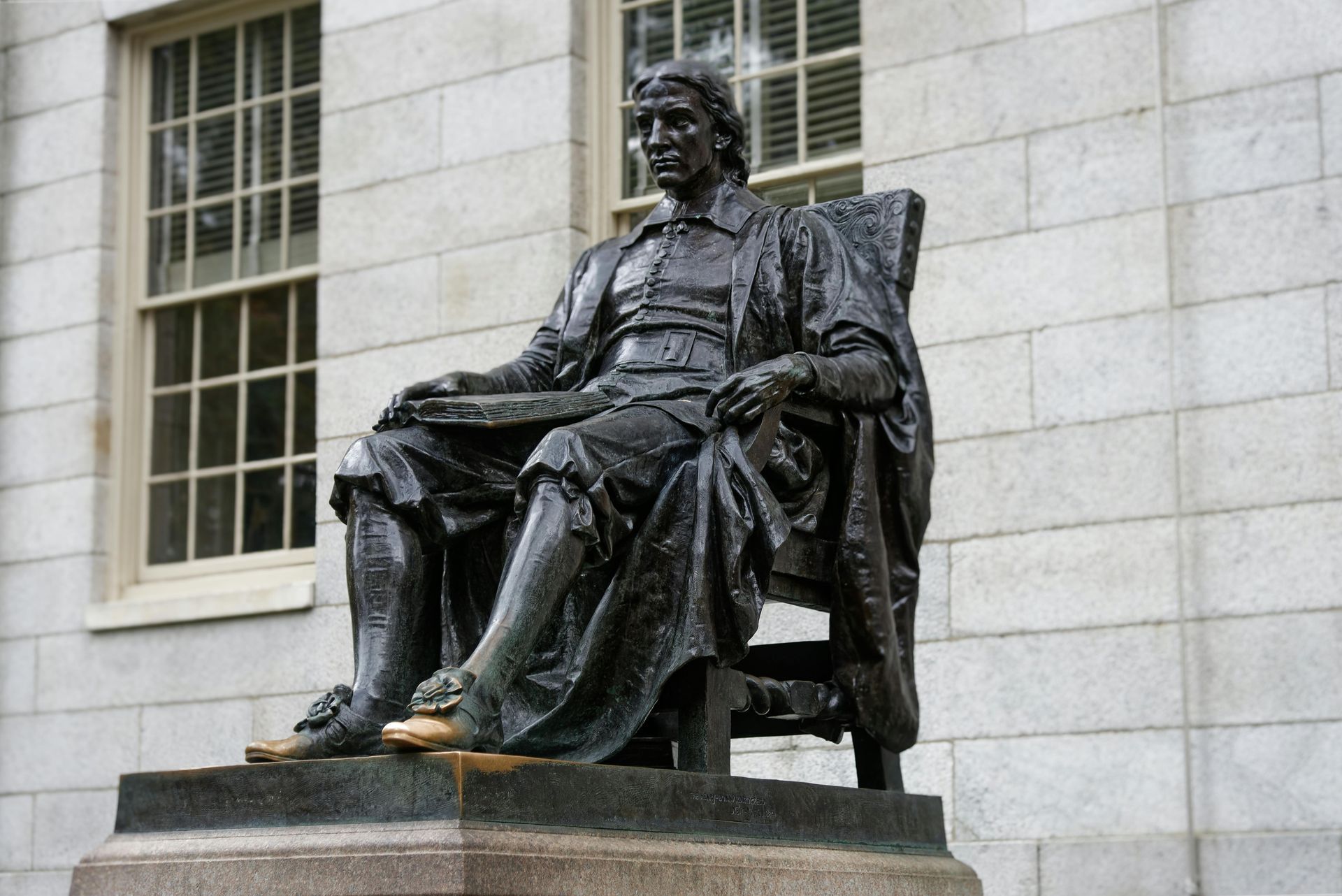
By James Freeman The Wallstreet Journal April 16, 2026 Hugo Chiasson and Elise Spenner report for the Harvard Crimson: Harvard is quietly asking donors for $10 million gifts to establish new endowed professorships in a sweeping bid to reshape its faculty under the banner of “viewpoint diversity,” according to two people familiar with the initiative. The campaign, driven by Harvard’s top brass, aims to raise several hundred million dollars to support a new cohort of professors. If successful, the funding could bring dozens of faculty members to campus and drastically shift Harvard’s academic makeup. University officials have pitched the effort to major donors — conservative and liberal alike — as a way to broaden ideological representation across Harvard, two people said. But the fundraising target has repeatedly shifted after pushback from donors who viewed the scale as too ambitious, one person said. Maybe it’s not ambitious enough. Duke professor Timur Kuran responds on X: This is one way to increase viewpoint diversity, but the heterodox thinkers to be hired would lack meaningful power on campus. Activist, woke departments would treat the heterodox thinkers as freaks, perhaps also as archenemies. Through its new Hamilton School, the U of Florida offers a more promising way: establishing competing departments that are not woke. Under UF’s reform, students get to choose courses from either side: the old woke departments and their un-woke alternatives. Advantages: 1) Heterodox thinkers are not marginalized. 2) Competition for students induces woke departments to shape up. To survive, the preexisting activist departments start putting more emphasis on scholarship and on improving their courses. Harvard’s path offers neither advantage. There’s an argument for simply shutting down the activist departments that are dedicated to dogma, rather than hiring people to counter them. There is also another path that might be the most serious and effective of all to reform such a university. Harvard could decide not to make any structural changes at all, and also to avoid asking for an expansion of resources, lest alumni suspect they are just getting run over by a new fundraising vehicle. Harvard could simply reallocate resources by annually firing the most ideological 10% of its faculty members and 20% of its administrators. Theoretically it might seem difficult to make subjective judgments on which of the staff are egregious in pushing personal political agendas. But in practice many academics have grown so comfortable making strident anti-intellectual pronouncements that the only challenge would likely arise when trying to limit the administrative cull to 20%. Step two of this plan for Harvard is to hire new faculty who are so curious and whose scholarship is so serious and unpredictable that no one can ascertain their political beliefs. After a few years people might be amazed at the improvement in campus culture, and at the sheer number of scholars who seem to delight in pursuing knowledge wherever it leads. Veritas! *** In Other News Another Opportunity for Harvard to Enhance Viewpoint Diversity? Frank Newport and Lydia Saad report for Gallup: Driven by a recent increase, young men in the U.S. have now surpassed young women in saying religion is “very important” in their lives. Gallup’s latest data, from 2024-2025, show 42% of young men saying religion is very important to them, up sharply from 28% in 2022-2023. By contrast, during this period, young women’s attachment to religion has held steady at about 30%. Although young men had previously tied young women on this key marker of religiosity, young men now lead by a statistically significant margin. The recent increase among young men also contrasts with minimal changes since 2022-2023 among older men and women… Young women were significantly more attached to religion than young men were at the start of the millennium, leading by nine percentage points (52% vs. 43%) in calling religion “very important” in their lives. That gap widened to as much as 16 points in the early to mid-2000s before steadily narrowing over the next decade. By the mid-2010s, the difference had shrunk to about five points, and the two groups remained about this closely aligned through 2022-2023. The most recent data mark a clear break, with young men now surpassing young women on this measure of religious importance. In a possibly related story, the American Founding website notes a letter from Harvard alum John Adams to his patriotic pal Mercy Warren 250 years ago: I know of no Researches in any of the sciences more ingenious than those which have been made after the best Forms of Government nor can there be a more agreeable Employment to a benevolent Heart. The Time is now approaching, when the Colonies will find themselves under a Necessity of engaging in Earnest in this great and indispensable Work. I have ever Thought it the most difficult and dangerous Part of the Business Americans have to do, in this mighty Contest, to continue some Method for the Colonies to glide insensibly, from under the old Government, into a peaceable and contented Submission to new ones. It is a long Time since this opinion was conceived, and it has never been out of my Mind, my constant Endeavour has been to convince Gentlemen of the Necessity of turning their Thoughts to these Subjects… The Form of Government, which you admire, when its Principles are pure is admirable indeed. It is productive of everything, which is great and excellent among Men. But its Principles are as easily destroyed, as human Nature is corrupted. Such a Government is only to be supported by pure Religion, or Austere Morals. Public Virtue cannot exist in a Nation without private, and public Virtue is the only Foundation of Republics. There must be a positive Passion for the public good, the public Interest, Honor, Power, and Glory, established in the Minds of the People, or there can be no Republican Government, nor any real Liberty. And this public Passion must be superior to all private Passions…. Is there in the World a Nation, which deserves this Character. There have been several, but they are no more. Our dear Americans perhaps have as much of it as any Nation now existing, and New England perhaps has more than the rest of America. But I have seen all along my Life, Such Selfishness, and Littleness even in New England, that I sometimes tremble to think that, although We are engaged in the best Cause that ever employed the Human Heart, yet the Prospect of success is doubtful not for Want of Power or of Wisdom, but of Virtue. *** James Freeman is the co-author of “The Cost: Trump, China and American Revival” and also the co-author of “Borrowed Time: Two Centuries of Booms, Busts and Bailouts at Citi.”

At Davidson College, just 3% of faculty fall into a political minority, highlighting a clear imbalance.

By Abigail S. Gerstein and Amann S. Mahajan, Crimson Staff Writers The Harvard Crimson January 27, 2026 Harvard faculty awarded significantly fewer A grades in the fall, cutting the share of top marks by nearly seven percentage points after the College urged instructors to combat grade inflation, according to a Monday afternoon email obtained by The Crimson. The email, which was addressed to Faculty of Arts and Sciences instructors and sent by Dean of Undergraduate Education Amanda Claybaugh, reported that the share of flat As fell from 60.2 percent in the 2024-2025 academic year to 53.4 percent in the fall. The decline follows a 25-page report Claybaugh released in October 2025 arguing that grade inflation had rendered the College’s grading system unable to “perform the key functions of grading” and encouraging stricter academic measures, including standardized grading across sections and in-person final exams. Continue Reading

Student evaluations subject professors to perverse incentives.

Furman Free Speech Alliance has the Right Idea.

Our 2025 In Review
Student evaluations subject professors to perverse incentives.
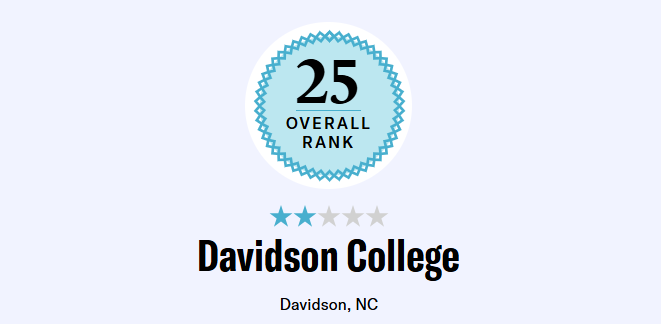
Written by John Craig December 10, 2025 On October 27, the Manhattan Institution’s City Journal published a major, breakthrough analysis of the performance of 100 prominent US (and one Canadian) universities and colleges, “Introducing the City Journal College Rankings,” For the first time, this new performance system includes data on measures (68 in all) like freedom of expression, viewpoint diversity tolerance, quality of instruction, investment payoff, and campus politicization that are not considered in the other major higher ed ranking systems. How did Davidson measure up in City Journal’s performance assessment? On a scale of one (bottom) to five (top) stars , Davidson is among the 63 schools that received 2 stars. Schools that, according to City Journal, have “Mostly average to below-average scores in all categories with no particularly noteworthy strengths. Significant, focused policy changes are needed at these schools.” (Full rankings available here College Rankings | Rankings ) To summarize the methodology, the City Journal team selected 100 schools that are highly touted by other ranking systems, widely known to the American public, and/or of high regional importance. The researchers gathered data on 68 variables across 21 categories covering four major aspects of on- and off-campus life. The Educational Experience categories were Faculty Ideological Pluralism, Faculty Teaching Quality, Faculty Research Quality, Faculty Speech Climate, Curricular Rigor, and Heterodox Infrastructure; the Leadership Quality categories were Commitment to Meritocracy, Support for Free Speech, and Resistance to Politicization; the Outcomes categories were Quality of Alumni Network, Value Added to Career, and Value Added to Education; and the Student Experience categories were Student Ideological Pluralism, Student Free Speech, Student Political Tolerance, Student Social Life, Student Classroom Experience, Campus ROTC, Student Community Life, and Jewish Campus Climate. No other higher ed ranking system includes as many variables. (Read more about methodology at College Rankings | Methods ) The data included publicly available information from sources such as the Integrated Postsecondary Education Data System (IPEDS), the Department of Education’s College Scorecard, and the Foundation for Individual Rights and Expression’s College Free Speech Rankings. The researchers also developed original measures for the project, such as the ideological balance of student political organizations and the partisan makeup of faculty campaign contributions. Each variable was coded so that higher values mean better performance and was weighted to reflect relative importance. For example, student ideological pluralism (as measured by self-reported student ideology and the left-right balance of student organizations) accounts for 5 percent of a school’s score while City Journal’s estimate of how many years it will take the typical student to recoup their educational investment to attend a given college accounts for 12.5 percent. A school’s overall score is the sum of points across the 21 categories, with the top possible score being 100. While the assessment system is for the most part hard-data-based, it has, like other ranking systems, subjective elements—like the weighing system. So methodological challenges will come and will doubtlessly lead to improvements the next time around. That said, the methodology strikes me as defensible and a marked improvement over that of other popular rating systems. I will conclude with some comments on the findings. Note that the Average score (out of 100) for the 100 institutions is 46 and the median score is 45.73—so overall, this is not a “high performance” group of institutions. No institution receives a 5-Star rating, and only two receive a 4-Star rating (University of Florida and University of Texas at Austin). Only 11 schools receive a 3-Star rating—Having “Mixed results across the four categories, showing strengths in some and weakness in others. These schools typically have several clear paths to improvement.” Because assessment scores are generally low and tightly clustered in the middle, the rankings by score are misleading: Davidson, at 51.16 with a rank of 25, looks to be in the top quartile (between Princeton and Georgetown), but in fact gets just a 2-Star assessment

Report from Ivy League school finds rampant grade inflation, but students complain administration is moving goal posts

Decades of big spending, new federal funding cuts and a changing view of higher education created a perfect storm; ‘Spending Your Tuition On Its Mistakes’